
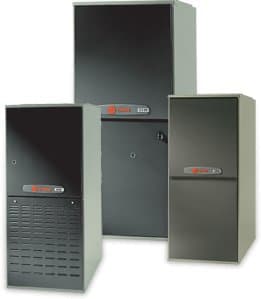
When the heat stops working, a few quick checks fix a surprising number of calls before a technician ever shows up. If those don’t work, the symptom usually points to the repair. Here’s what to check, what the common failures look like on furnaces and heat pumps, and when to stop and call.
What should you check first when the heat stops working?
Boer Brothers Heating & Cooling recommends four checks before you call, because a no-heat problem is sometimes a setting, a switch, or a filter:
- The thermostat. Make sure it’s set to Heat, not Cool or Off, and set a few degrees above the room temperature. Replace the batteries if the screen is blank or dim. Programmable thermostats can lose their schedule after a power outage.
- The breaker and power switch. Look for a tripped breaker labeled furnace, air handler, or heat pump, and reset it once. If it trips again, leave it off and call us, because it’s protecting you from an electrical fault. Also check the service switch on or near the furnace. It looks like a light switch and is easy to flip off by accident.
- The air filter. A badly clogged filter can make a furnace overheat and shut itself off as a safety measure. Replace it if you can’t see light through it.
- The panel door and gas valve. Many furnaces won’t run unless the front panel is closed tightly. On a gas furnace, the valve handle should run parallel to the pipe. If you smell gas, don’t touch it. Leave the house and follow the steps below.
Give the system 15 to 20 minutes after any change before deciding it didn’t work.
Why won’t my furnace turn on, or why is it blowing cold air?
A gas furnace that won’t light or blows cold air usually has an ignition or safety problem. Most furnaces built in the last 20 years don’t have a standing pilot light. They use an electronic ignitor and a flame sensor, and both are common wear parts.
- Ignitor failure. The ignitor glows to light the burners. When it cracks or wears out, the furnace tries to start, fails, and locks itself out after a few attempts.
- Dirty flame sensor. The flame sensor confirms the burners lit. If it’s coated, the furnace lights and then shuts off a few seconds later. It’s a quick repair, but it needs a technician.
- Clogged condensate line. High-efficiency furnaces drain water. A blocked line or vent keeps the pressure switch from closing, and the furnace won’t fire.
- Blowing cold air. Check that the thermostat fan is set to Auto, not On. If it’s on Auto and the air is still cold, it’s an ignition or gas supply problem.
- Short cycling. A furnace that starts and stops every few minutes is often overheating from a clogged filter or blocked vents.
Don’t keep resetting a furnace that has locked out. Repeated restarts on a furnace with an ignition fault can make the problem worse. And if a technician finds a cracked heat exchanger, the furnace stays off until it’s replaced, because a crack can leak carbon monoxide into the house.
Why is my heat pump blowing cool air?
If you have a heat pump, cool air from the vents on a cold day often isn’t a repair at all. It’s defrost mode. When it’s cold and damp outside, frost builds on the outdoor coil, and the heat pump reverses for a few minutes to melt it. You may see steam rising from the outdoor unit, and the vent air may feel cooler for a short time. That’s normal.
Heat pump air also runs cooler than furnace air even when everything works. Trane puts it at 85 to 93°F, which feels cool against your hand. If the house is holding temperature, the system is doing its job.
Call us if you see any of these:
- The outdoor unit stays covered in ice for more than an hour, or ice builds up thick on the top or sides. Clear leaves and pine straw away from the unit, but don’t chip at the ice.
- The outdoor unit isn’t running while the indoor fan is.
- It cooled fine all summer but won’t heat now. That often points to a stuck reversing valve.
- The house falls behind only on the coldest nights. The backup heat strips may have failed. They only run in real cold, so a strip that quit last winter often isn’t noticed until the next cold snap.
- The “Aux” or “Emergency Heat” light stays on in mild weather, which means the system is leaning on its expensive backup heat.
For how often it really gets cold enough to matter here, see our guide to switching from a gas furnace to a heat pump.
What do heating system noises mean?
A new noise from your heating system is worth paying attention to, especially if it’s loud or sudden.
- Banging or booming at startup: often delayed ignition on a gas furnace, where gas builds up before it lights. Call us.
- Squealing or grinding: usually the blower motor or its bearings.
- Rattling: a loose panel, a loose part, or something in the ductwork.
- Clicking with no heat: the furnace is trying to ignite and failing.
- Whistling: often a clogged filter or a closed vent restricting airflow.
If a noise is new and loud, turn the system off at the thermostat and call us before it causes more damage.
When should you stop and call right away?
Some heating problems aren’t a wait-and-see situation. Leave the troubleshooting alone and get help if:
- You smell gas. Leave the house now, then call your gas company’s emergency line or 911 from outside. Don’t flip switches or use the thermostat on the way out.
- Your carbon monoxide alarm goes off. Get everyone outside and call 911. Then call us to inspect the furnace before it runs again.
- A breaker trips more than once. That’s an electrical fault, not a nuisance.
- You see scorch marks, smell burning plastic, or see water pooling around the furnace or air handler.
Boer Brothers Heating & Cooling answers heating calls 365 days a year from our Chapel Hill and Cary locations. Call 919.813.2556 or see our heating repair services.
Most of these are preventable
Dirty flame sensors, worn ignitors, clogged filters, clogged condensate lines, and failed heat strips are the repairs a yearly tune-up catches before the first cold night. Most of these are preventable with fall maintenance, which is why we recommend booking the visit before the first cold snap. Our Maintenance Club includes preseason scheduling and a 10% discount on repair parts.
Frequently Asked Questions
Should I switch my heat pump to emergency heat?
Only if the outdoor unit has stopped working and you’re waiting on a repair. Emergency heat shuts the heat pump off and runs the backup electric strips alone, which keeps the house warm but costs far more to run. Switch it back as soon as the heat pump is fixed.
How long can a house go without heat in winter?
A well-insulated house usually loses heat slowly enough to get through a night, but the real risk is frozen pipes once temperatures drop well below freezing. If the heat is out in a freeze, open cabinet doors under sinks on outside walls, let faucets on exposed pipes drip, and call Boer Brothers Heating & Cooling at 919.813.2556.
Related posts
 Heating
Cracked Heat Exchanger? How to Know Before You Replace Your Furnace
 Commercial HVAC

